Creating a Photographic Story

copyright Karen Ulvestad

A photograph is the reflection of the photographer at the time the image is created. It reflects our mood, vision, and emotional state. The way the light is captured in the image, then post processed reveals the story hidden in the photograph. It is a visual communication between the photographer and their audience.

The image above was take this spring during the afternoon (during a short day escape during the Pandemic). The weather report called for rain, yet it hadn’t rained yet. The clouds were amazing and dynamic. The hillside viewpoint allowed me to include the Columbia River, Vantage, I-90, and the dynamic clouds. I brought more contrast into the post processing. I like how it look a ominous.

In the next image, I took a different approach. . .

copyright Karen Ulvestad

What attracted my attention in this image is the dynamic clouds, the lines of the hillside, and the wild horse monument. I return to this place at least once a year to experience the high desert changes. I love the changing sky. Often this area is a treasure trove of opportunities to explore line, shape, textures, and other compositional elements. It usually isn’t over-run with people, and the hike to the top is relatively easy.

The biggest piece in creating a photographic story is the photographer’s vision or ability to compose in the field. It is the culmination of an idea, and the cooperation of the weather/other elements in the environment. The subject or important element needs to fill the frame. The following photograph focuses on the amazing cloud formations.

copyright Karen Ulvestad

The clouds are far more interesting than the landscape, yet what sits on the horizon? This is looking west towards the Cascade Mountains, and the clouds have created a dark blue-gray background for the turbines in the distance. A small airplane sits in the sky against the background of the massive clouds. Both the turbines and airplane give some perspective on the size of these cloud formations.

Exposure for these images is important and contributes to the story. All three are shot with at F16 or F22. This is a large depth of field, and gives the viewer a visual reference to the fore-ground, mid-ground, and background. A larger depth of field gives an expansive feeling to the photographs, and contributes to the 3D feeling in the images. A shallower depth of field would give less visual information to the viewer, and feel more 2 dimensional.

Through all these social challenges we face today, may everyone stay well and continue to photograph the world around us.

Karen

Winter Light & Photography

WPHeader030215-5

The light through the winter changes in both color and intensity. The sun drops lower on the horizon, and travels through more of the Earth’s atmosphere. This changes the colors that we and our cameras see.

The photograph above is trumpeter swans in January at dusk. The light in the sky is soft and diffused. The swans reflect the color of the blue sky on their wings, and remain neutral colored on their underside.

WPHeader030215-4

The colors change in the landscape. Everything appears more pastel, and with less contrast. Even the blue of the sky changes to a softer hue. The clouds add interest to the photograph, and are perfect to include into the composition.

The photograph above was taken during the winter months. The soft light of late day is diffused by the broken clouds in the sky, offering a soft light bathing the scene. The colors are rich, yet softer than the summer months.

copyright Karen Ulvestad

Winter can bring starkness of color with its snow, frost and/or over cast sky. It is a great time to explore monochromatic images. Enjoy the season!

Happy shooting. . .Karen


Remember the Sky

copyright Karen Ulvestad

The sky is an important composition element. When included in the photograph, it can be a solid blue or grey, have texture from clouds, or have importance (depending on how much is included). Each of these composition choices affects the “feeling” of the photograph.

In the image above, the clouds are an important part of the composition. Their shape reflects the patchy snow on the meadow below.

WPHeader030215-2

In this photograph, the clouds come in two distinct textures. One is puffy and closer to the water’s surface. The others are higher in the atmosphere, and are linear. The puffy clouds mimic the headland, and islands (sea stacks). The higher clouds create a diagonal line, which draws the views eye through the image.

copyright Karen Ulvestad

In this last image, the sky is without clouds. The interest in this photograph is the flowers and building, without the sky competing with the subject for attention. A clear sky helps a specific subject stand out, or it simplifies the composition.

Happy shooting. . .Karen

Shadows, Highlights & Mid-tones

copyright Karen Ulvestad

So, I’ve been missing in action the past few months, and neglected my blog!

I’m back. . .at least until my next adventure that leads me away from the computer screen and the Internet.

I’ve been pursuing the Light. Without light, there cannot be a photograph. Light is a challenging subject, because our eyes see it one way, and our camera sees it in a different way. Our eyes can see the details in the brights (highlights) and darks (shadows) on the brightest sunny day. Our camera cannot.

copyright Karen Ulvestad

Technically, this means the difference between shadow and highlight is greater than 2-stops of light. So, what does a photographer do?

One to compensate for this difference in lighting is to use the HDR setting in the camera, or a software program on the computer. The HDR setting on the camera will take 3 exposures (1 for the shadows, 1 for the highlights, and one for the mid-tones), and combine the 3 into one photograph. Computer programs work with highlight, shadow, and mid-tone settings within the photograph to accomplish a similar effect.

Life is Good!

Karen

copyright Karen Ulvestad


Happy Holidays

copyright Karen Ulvestad


Happy Shooting. . .Karen


Of the Land, Sea & Air – A Coastal Photographic Adventure


copyright Karen Ulvestad
This bald eagle is flying in after missing a fish in the ocean. This is at Neskowin.

“It was perfect for all levels. It was a great combination of technique and artistry.” Susan H.

We will have minus tides during this workshop, which will allow students to view and photograph tide pools, walk closer to bird nesting areas and marine mammal resting areas. It’s a great opportunity to learn the details of bird and marine mammal photography, and shoot at beautiful locations. The coastal waters are filled with harbor seals, gray whales, and sea birds during the late spring season.

copyright Karen Ulvestad
These are nesting cormorants on the Oregon coast. These can be viewed at low tides, in the nesting season.

The workshop starts in the classroom, with an interactive presentation about exposure, techniques and equipment. Then, students go out into the field and practice what was learned in the classroom, ask questions and learn how to spot wildlife. Composition is discussed through-out the workshop, both in the classroom and in the field. The workshop is about 30% in the classroom and 70% shooting in the field with instruction.

copyright Karen Ulvestad
This California sea lion was resting on the rocks.

This last photograph is the students photographing harbor seals in the surf. Most of the subjects can be photographed with a 400mm lens or shorter. It is recommended that students bring a tripod. For more information or to sign-up, visit Sitka Center.

copyright Karen Ulvestad
Last year’s workshop students are photographing harbor seals playing in the surf.

A Great Blue Heron Story. . .

Great Blue Heron are a bird that survives in urban and wilderness areas. They eat frogs, small rodents, fish, crabs, and more. They nest in colonies or rookeries that can be home to a hundred or more birds. These herons are majestic in their demeanor, territorial while hunting, and tolerant during nesting.

The photo below is taken at an urban area rookery that sits near Lake Washington in Kenmore. The photo below shows the entire rookery. Currently, there are about 50 +/- nests in the trees, and 100+/- Great Blue Herons. It’s quite a sight, though challenging to photograph. The wetlands are fenced off, so photography happens from the park-n-ride parking lot, or along the back entrance.

copyright Karen Ulvestad

The photo below shows the nesting pairs and their nests. Often, there are single birds vying for the attentions of another bird, or pairs looking for a nesting site. I counted about 28-30 nests in this tree alone. Surprisingly, the colony is relatively quiet. These photos were taken at mid-day, and fortunately, there were interesting clouds in the sky for the background. I’ve photographed this rookery before, I had the fortune of stormy weather and a rainbow.

Tip: Aperture is important while shooting a Rookery. Most of these images were shot with f5.6-f8.

copyright Karen Ulvestad

This next image is of a nesting pair building their nest. He is bringing sticks, and she is placing them into the nest. I watched him bring one stick at a time, watch her place it in the nest, and he would preen her feathers during the process. It’s a difficult area to photograph the herons flying into their nesting sites, so scouting the location and planning is a good idea.

Tip: Over-expose the photos, so the details of the birds show in the photographs. Otherwise, the birds will silhouette against the sky.

copyright Karen Ulvestad

So, I’ll leave with one last photo. This is a closer view of several nests and herons in the rookery. The Bald Eagles will hunt for un-attended chicks later in the year.

Happy Shooting. . .Karen

copyright Karen Ulvestad

Photographing Winter

Winter is a magical time to photograph the natural world. The world is changed with the white of snow or frost. Trees become dormant for the season, and visually become lines in the composition. The temperatures drop below freezing, and it is a different environment for operating a camera. Exposure changes to reflect white.

Below is a photograph of starlings in a tree covered with hoarfrost. The dark tone of the birds is in direct contrast to the white of the sky and tree limbs. For the frost to appear white, it is the time to over-expose the photograph. The dark tone of the birds will yield subtle colors and details. This image was shot at 100 ISO, 1/60 second shutter speed, and F8 aperture. I chose F8 to bring a larger depth of field to the image, yet knew sharpness didn’t matter for the background. The fog had not lifted too far from the ground, and was a mono-chromatic white.

copyright Karen Ulvestad

The reason that snow or white subjects need to be over-exposed is due to the nature of the camera’s light meter. The light meter reads the world as 18% gray, when it reads 0 (or the center of the meter). To compensate, the exposure needs to let more light into the camera, so the whites look white.

This second image has foreground, midground and background. I wanted to show the fore and mid ground in focus, and let the fog become the backdrop for the image. This photograph was shot at 200 ISO, 1/60 second shutter speed, and F10 aperture. It gave me the depth of field I was wanting to show in the image. The use of the tree branches at the top helps create a feeling of depth in the image, and help show the subject.

copyright Karen Ulvestad

This last image was a long-needle pine tree covered in hoarfrost. The ice crystals still maintained their crispness, and the cones were a nice contrast to the rest of the photo. I used a shallower depth of field to blur the background, and bring the viewer’s focus to the cones, needles and hoarfrost in the front of the image. The exposure for this one is 200 ISO, 1/60 second shutter speed, and F5.6 aperture.

Happy Shooting. . .Karen

copyright Karen Ulvestad

Stormy Weather Photography. . .

Late fall and winter weather is happening in the northern hemisphere, and it presents different photography challenges. The weather plays an important part at this time of the year. It is more likely to be windy, stormy, rainy, foggy or snowy at our outdoor destinations. The leaves have left the trees in many areas, giving fewer hiding places for wildlife and birds. The landscape takes on a different “feeling” than the warmer months of spring and summer. The colors change, and daylight hours are shorter.

During strong winds and stormy weather, birds seek refuge in sheltered areas. This image below was taken during strong winds. This great blue heron is sheltered from the winds by the marsh grasses, and is feeding in the shallow water. In this image, he is cleaning his feet. There were several great blue heron roosting in the tall grass behind this bird. The weather brought these birds closer to the walk-way through the marsh, and made them easier to photograph. Other birds finding shelter in the marsh were Northern Shovelers (ducks) and Killdeer. Small song birds were feeding in the cattails and trees.

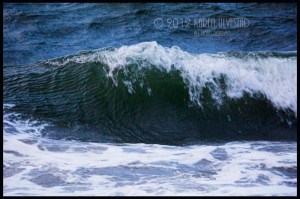
copyright Karen UlvestadThe beach is a wonderful location during high winds or stormy weather. In this photograph, the wave is coming into shore, and is about 4-6 feet tall. It wasn’t raining, but the winds were very strong. It is good to watch the surf, before going onto the beach, to see where the high-water mark is at. Even with this information, the wind can send waves higher on the beach. On the ocean, these are called sneaker-waves. They can pull people into the water, and can be deadly. It is important to be prepared for the environment and weather.

copyright Karen UlvestadIt is important to wear the appropriate clothing for adventures during the winter. Hypothermia can affect those who are not prepared for rain, wind, snow and colder temperatures. It is good to dress in layers, with a good water-repellent shell over the top. The wind will drop the temperature (wind-chill factor), and the cold can hurt exposed areas of skin (hands, fingers and faces). It is important to wear footwear that will keep feet warm and dry. This type of equipment can be found at outdoors stores, such as ski shops or REI.

Camera batteries will lose their charge faster in the colder weather. It is good to bring an extra battery, and keep it in a warm place (pocket near body heat). Most camera equipment is water-resistant, but it depends on the manufacturer and model of the equipment. It is good to keep the gear dry with a good camera bag (water-proof), covering for the camera/lenses and a quick-dry cloth to dry any water that does get onto the equipment.

The photograph below illustrates being prepared for the weather. More later. . .

copyright Karen UlvestadHappy Shooting. . .Karen

Rainy Day Photography

copyright Karen UlvestadWith outdoor photography, it is inevitable that we get caught in the rain.  I always enjoy those moments, because it adds a different “feeling” to my photographs.

The weather greatly influences the final photograph.  This one of the Great Blue Heron rookery was taken in March, during a rain shower.  The sun behind me created the rainbow behind the rookery.  Without the rain or the sun, this would have been a very different image.  It would have had a flat sky, with little color.

Rain can be damaging to camera equipment.  It is good to shelter the camera from the rain, though remember that most cameras are water-resistant.  All equipment should be dried off, if it gets rained on.  A chamois cloth works well, dries quickly and fits into a camera bag pocket.  Drying of the camera and lens keeps the it working well.

Also, it’s important to protect the camera and lens being used in the inclement weather.  There are several ways to do this.  If the camera is mounted on a tripod, an umbrella can be held over the equipment to protect it from the rain.  When carrying the camera, a shower cap can work as protection.  Currently, a clear plastic sleeve can be purchased at a camera store.  It fits over the camera and lens, and allows the photographer to slid their hands in the sides to operate the camera.

One of the most important pieces of equipment, in wet weather, is the camera bag.  It is important to have a bag that is water proof, or at least water-resistant.  Many bags, such as backpacks by Tamerc, have waterproof zippers, and fabric that covers the them.  They are built to be in wet weather, without compromising the camera equipment inside.  Also, these bags are well padded to protect equipment from damage.  Many other manufacture’s have good, protective camera bags too.

Happy shooting until next time. . .Karen